
Hybrid Solar with Battery (2026): When Home Backup Is Worth It
Hybrid solar with battery backup in 2026: why on-grid systems switch off in a power cut, when a battery is worth it, how to size it, and the subsidy and GST rules.
Read MoreExpert insights on solar technology, project updates, and renewable energy trends from our 25+ years of experience
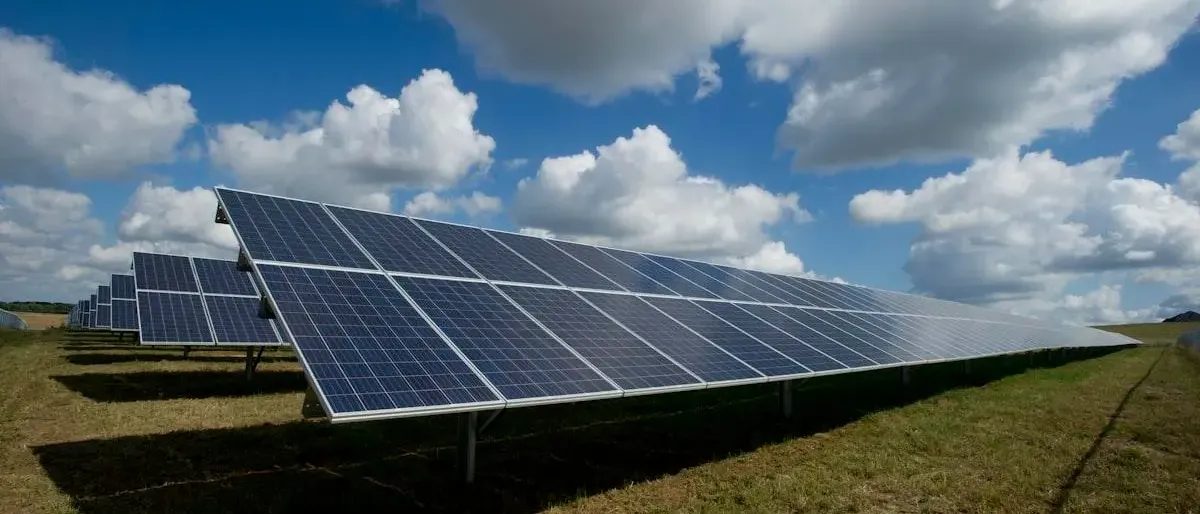
Hybrid solar with battery backup in 2026: why on-grid systems switch off in a power cut, when a battery is worth it, how to size it, and the subsidy and GST rules.
Read More
Net metering, behind the meter with zero export, or open access: how Andhra Pradesh MSMEs can choose a rooftop solar route under the 2026 APERC rules.
Heating 100 litres of water takes about 3.5 units. How a geyser, a heat pump and a solar water heater compare on running cost, roof space and 2026 rules.
A dead or weak string can cost a solar plant 44 to 55 units a day and still hide in the monthly total. How to find it, what it costs, and what the 2026 O&M rules say.
How Hyderabad apartments and gated communities can use rooftop solar in 2026: TGERC metering options, PM Surya Ghar aid for RWAs, and a simple sizing method.
Who can buy solar through open access in Telangana in 2026, the 12 working day approval clock, the surcharges and banking rules, and a simple way to check whether it saves you money.
A solar quote talks in kW, your bill in units. How many units each system size generates, how output changes across Hyderabad's year, and how to size a system from your bill.
Where do flat plate collectors pay back in a factory? Boiler preheating, process hot water, a simple payback method, and the BIS and GST rules that changed in 2025 and 2026.
A solar system carries several warranties, not one. How to read the panel, inverter and workmanship warranties, with MNRE's 2026 rules on start dates and claims.
Should your factory buy its rooftop solar plant or pay only for the power? We compare CAPEX, OPEX (RESCO) and offsite PPA, with the 2026 rules in Telangana and Andhra Pradesh.
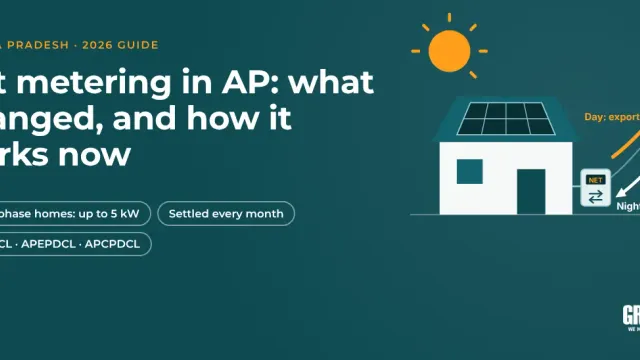
Andhra Pradesh changed its rooftop solar rules in 2025 and 2026. Here is what now applies with APSPDCL, APEPDCL and APCPDCL, from limits and fees to the net meter process.
From 1 January 2027, net metering and open access solar projects must use cells from an ALMM List-II maker. If your factory plans rooftop solar, the commissioning date now decides what you can buy.
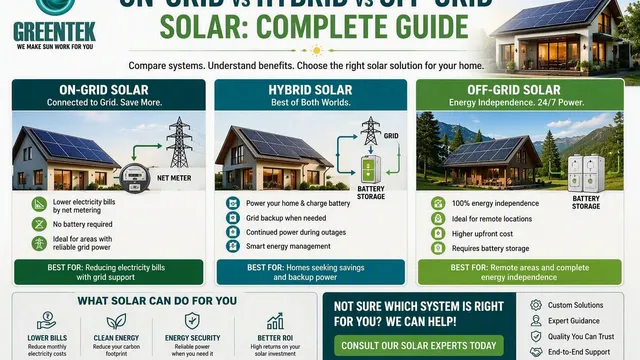
Choosing the right solar system is just as important as choosing the right solar panels. Understanding On-Grid, Hybrid, and Off-Grid systems helps maximize your investment.
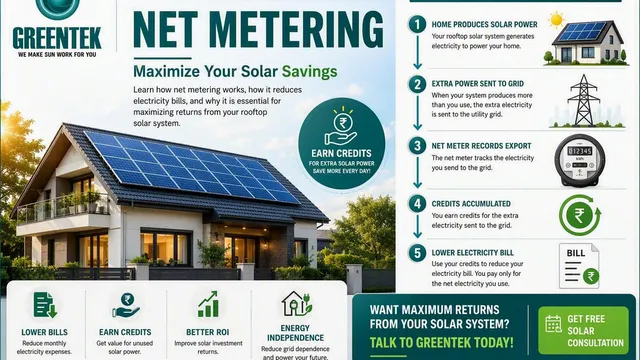
Net metering allows homeowners to export excess solar power to the grid and use it later, maximizing savings and improving the value of a rooftop solar investment.
MSMEs pay ₹7–9/unit for power and rates keep rising 3–5% a year. Rooftop solar generates at roughly half that, with 40% year-one depreciation and 3–5 year payback.
A 10kW rooftop system costs about ₹5.6–6.4 lakh in 2026 — roughly ₹4.8–5.6 lakh after the ₹78,000 subsidy. Full cost breakdown, generation and payback.
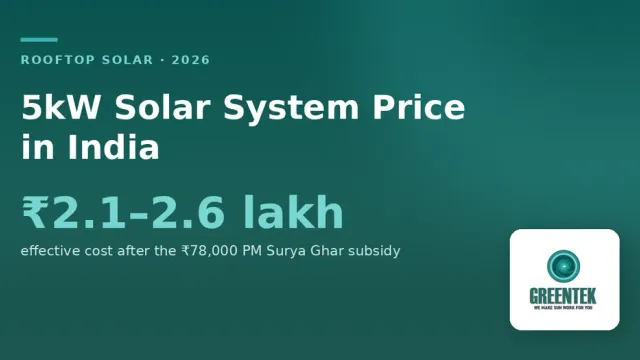
A 5kW rooftop system costs about ₹2.9–3.4 lakh in 2026 — roughly ₹2.1–2.6 lakh after the ₹78,000 subsidy. Full cost breakdown, generation and payback.

Register, get DISCOM feasibility, pick a registered vendor, install, net-meter, and the Rs 78,000 subsidy lands in your bank. Every step explained, including where applicants get stuck.
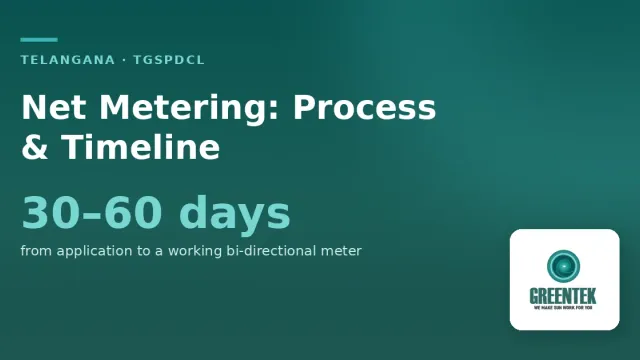
Net metering turns the grid into your battery. Here is how it works with TGSPDCL in Hyderabad and Telangana - the bi-directional meter, the process, and realistic timelines.
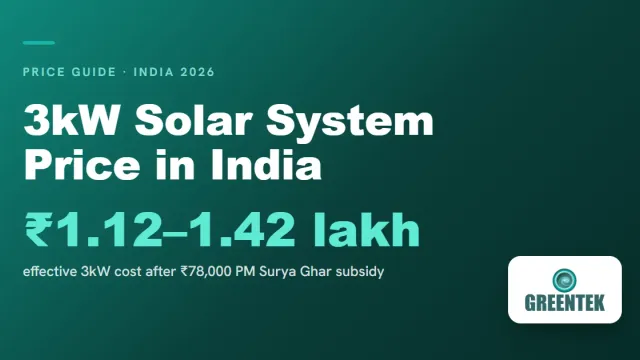
A 3kW rooftop system costs about Rs 1.9-2.2 lakh installed, and roughly Rs 1.12-1.42 lakh after the Rs 78,000 PM Surya Ghar subsidy. Here is where every rupee goes.

As rooftop solar adoption accelerates, quality and consumer protection are becoming critical. PM Surya Ghar is introducing stronger measures to ensure better installations and service.

Greentek India Limited invests in Green Sage AI to advance solar monitoring, SCADA intelligence, BESS integration, and energy AI for utility and C&I solar assets.

Short-term power demand spikes can lead to penalties and increased costs. Battery Energy Storage Systems (BESS) offer a smarter, cost-effective alternative for industrial power management.

PM Surya Ghar Yojana helps homeowners install rooftop solar with subsidies up to ₹78,000—reducing electricity bills and enabling long-term energy savings.

As rooftop solar scales in India, structural quality becomes critical. Greentek Vasistron marks a strategic step toward building reliable, high-performance solar infrastructure.

Boiler fuel costs are rising and unpredictable. Solar thermal on an OPEX model offers industries a way to reduce energy costs—without any upfront investment.

Solar thermal technologies offer the most efficient way to generate heat from sunlight. From FPC to ETC and reflector systems, each technology serves distinct industrial heating needs.

Managing thousands of rooftop systems manually is inefficient. Centralized solar monitoring is becoming essential for EPCs to reduce costs, improve performance, and scale profitably.
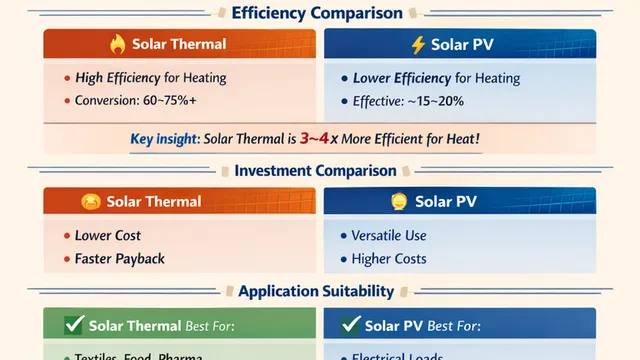
Industrial heating is energy-intensive—choosing the right solar technology can change that. Solar thermal and PV offer different paths, but their efficiency and investment impact vary significantly.

March 31, 2027 may seem far away—but the window to act is already closing. The PM Surya Ghar scheme is a rare opportunity to secure long-term energy savings before demand and timelines tighten.

What if your biggest energy cost could become a strategic advantage? Open access is reshaping power procurement in India—unlocking cleaner energy, lower costs, and greater control through evolving sta

Solar is no longer just about installation. It’s about maximizing performance. Green Sage transforms raw data into actionable insights—helping operators detect issues early, reduce losses, and make sm

In an era where renewable energy is no longer optional but essential, companies that combine experience, innovation, and execution excellence stand apart. Greentek is one such organization.