
Solar Plant O&M and Monitoring (2026): What an Underperforming String Costs
A dead or weak string can cost a solar plant 44 to 55 units a day and still hide in the monthly total. How to find it, what it costs, and what the 2026 O&M rules say.
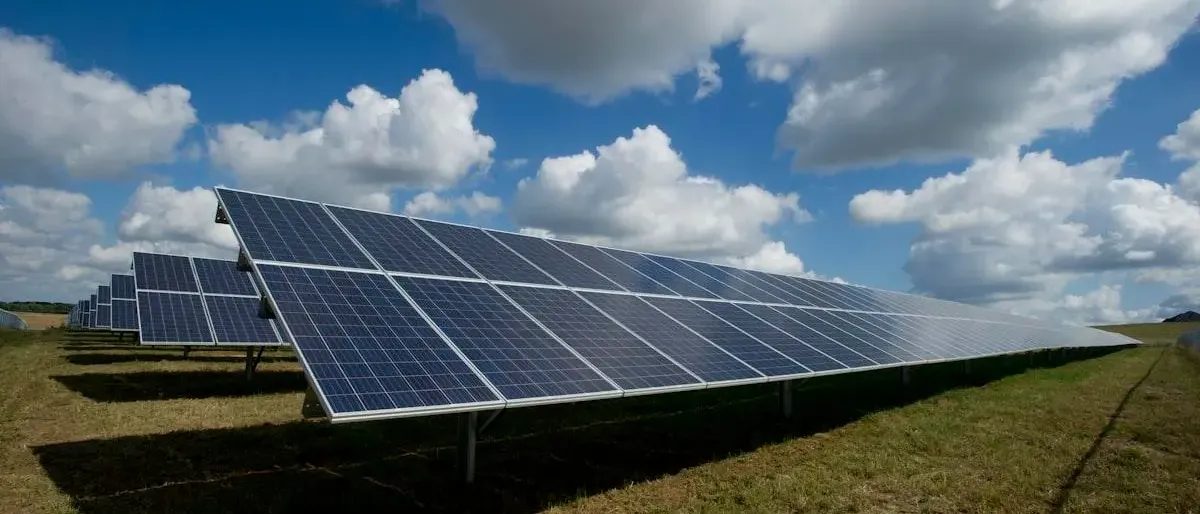
Quick answer: A string is a chain of solar modules wired in series into one inverter input. If one string stops producing, the plant loses roughly that string's share of its output, every sunny day, until someone notices. For a typical string of about 11 kWp, that is 44 to 55 units a day at the Indian average of 4 to 5 units per kWp (CSE India). On a large plant, one dead string barely moves the total, which is exactly why it goes unnoticed. String-level monitoring, a performance ratio check each month and an annual thermography inspection are the simplest ways to catch it.
Most factory owners look at one number from their solar plant: total units generated this month. That number hides a lot. A plant can lose a string, a fuse or a connector and still produce a "reasonable" monthly total, especially in a good month. This guide explains what a weak string costs, how to find it, and what the 2026 rules say.
What a string is, and how it fails
Modules are connected in series to build up voltage. A series chain is called a string, and each string feeds one input (MPPT) of a string inverter, or a combiner box on larger plants. Because the modules are in series, a fault anywhere in the chain can pull down or cut off the whole string.
Common causes include a blown string fuse, a loose or burnt connector, a damaged cable, a DC isolator left open after maintenance, a failed bypass diode, a cracked or damaged module, and local shading or heavy soiling on part of the string. Some of these stop the string completely. Others cut its current by a few percent, which is harder to see and can last for months.
What an underperforming string costs
The arithmetic is simple. Take the string's size in kWp, multiply by the daily generation per kWp for your site, and multiply by the number of days the fault goes unnoticed. CSE India puts typical Indian generation at 4 to 5 units per kWp per day. Our kW vs units guide for Hyderabad explains how this swings through the year.
Assume a string of 20 modules of 550 Wp, which is 11 kWp:
| How long the dead string goes unnoticed | Units lost (at 4 to 5 units per kWp per day) | Value lost for every Rs 1 of your tariff |
|---|---|---|
| 1 week | 308 to 385 | Rs 308 to Rs 385 |
| 1 month (30 days) | 1,320 to 1,650 | Rs 1,320 to Rs 1,650 |
| 3 months | 3,960 to 4,950 | Rs 3,960 to Rs 4,950 |
| 1 year | 16,060 to 20,075 | Rs 16,060 to Rs 20,075 |
Multiply the last column by what you pay per unit for grid power to get your own figure. A string running 10% low instead of dead costs one tenth of this, but such faults are also the ones most likely to run for a year.
Now look at the same string from the plant's side:
| Plant size | Approximate number of 11 kWp strings | Share of output lost if one string is dead |
|---|---|---|
| 50 kWp | 4 to 5 | About 20 to 25% |
| 100 kWp | 9 | About 11% |
| 500 kWp | 45 | About 2% |
| 1 MWp | 90 | About 1% |
On a 1 MWp plant, a 1% dip is smaller than the normal difference between a clear week and a cloudy one, so the monthly total will not reveal it. The units are still lost.
How to spot it in your monitoring data
Compare strings with each other, not with last month. Strings on the same inverter, facing the same direction, see the same sun. On a clear day around noon their currents should be close to each other. A string that reads zero, or clearly lower than its neighbours day after day, needs a site visit. Most modern string inverters report current per input; ask your installer to give you access to that view, not just the daily total.
Use performance ratio to remove the weather. Performance ratio (PR), defined in IEC 61724, compares what the plant actually produced per kWp with what the sunlight at the site should have produced. Because it accounts for irradiance, it separates a cloudy month from a faulty month. PR is naturally a little lower in the hot months, because modules lose efficiency as they heat up (Sandia National Laboratories, PV Performance Modeling Collaborative), so compare the same month year on year, or track the trend. A PR that steps down and stays down usually means a fault, not weather.
Watch what cleaning does. If generation jumps after a wash, soiling was the problem and your cleaning schedule may be too slow. If it does not recover, look for an electrical fault.
| What the data shows | Likely cause | Typical check |
|---|---|---|
| One string at zero | Blown fuse, open connector, isolator left off, cut cable | Site visit: fuses, connectors, isolators |
| One string steadily lower than its neighbours | Damaged module, failed bypass diode, local shading or soiling | Visual check, thermography, I-V curve test |
| All strings drifting down together | Soiling | Clean and compare before and after |
| Whole inverter low or tripping | Inverter fault, overheating, grid voltage or AC side issue | Inverter alarm log, ventilation, AC side |
Thermography: the annual check worth paying for
An infrared camera shows hot spots that are invisible to the eye: overheating connectors, failing fuses, damaged cells and bypass diodes. The international technical specification IEC TS 62446-3 (2017) defines outdoor thermographic inspection of PV modules and plants in operation, and says the inspection can include cables, contacts, fuses, switches and inverters. It supports fire prevention as well as generation, which is why many owners schedule it once a year, ideally before the hot months. The standard describes a simplified level and a detailed level; the detailed inspection is meant to be done by a PV expert together with thermography specialists.
What the rules say about maintenance in 2026
- PM Surya Ghar (residential): under REC's vendor framework of November 2024, empanelled vendors must provide free repair and maintenance for at least five years, including monitoring system performance, and the system carries a five-year warranty from commissioning. In October 2026, MNRE instructed vendors to submit geo-tagged, time-stamped proof within 15 days of a defect being assigned to them on the vendor portal (as reported by Construction World).
- Commercial and industrial plants: there is no national subsidy condition fixing O&M for business plants. What you get is what your EPC or O&M contract says, so read it carefully.
- Telangana plants above 56 kWp: the TGERC rooftop solar regulation of 2025 requires insurance and Chief Electrical Inspector certification. Keep these records with your O&M file.
When you sign or renew an O&M contract for a business plant, ask for: string-level data access, a monthly report with PR, response times for faults, the cleaning frequency and who supplies the water, an annual thermography report, and how spare fuses, connectors and modules are handled. Our solar warranty guide explains what the module and inverter warranties cover, and our CAPEX vs OPEX vs PPA guide explains who carries O&M under each ownership model.
Frequently asked questions
How often should panels be cleaned?
It depends on the site. Plants near roads, cement or ceramic units, or construction sites soil faster. Instead of a fixed calendar, compare generation before and after each wash and adjust. Dirt can cut generation by 30% or more if panels are left uncleaned (CSE India).
Is inverter monitoring enough?
Inverter-level data shows that something is wrong with an inverter. String-level data shows which string. On plants with many strings per inverter, the difference decides whether a fault is found in a day or a quarter.
What PR should my plant achieve?
It depends on design, location and how PR is calculated, so agree the method and the expected value in the contract. The useful signal is the trend: a sudden, lasting drop points to a fault.
Rules can be revised. This guide is current as of November 2026; check the latest MNRE, REC and TGERC orders and your own contract before relying on it.
Want a second look at your plant's data?
Greentek has been designing, building and maintaining solar plants from Secunderabad since 1997. If your monitoring numbers do not add up, or you are reviewing an O&M contract, our team is happy to take a look.
About the Author
About Greentek
Get a Free Solar Quote
A Greentek engineer will call you within 24 hours.
Need Solar Solutions?
Interested in learning more about our solar energy solutions? Get in touch with our experts.
Get Free Consultation