
Rooftop Solar for Apartments and Gated Communities in Hyderabad (2026)
How Hyderabad apartments and gated communities can use rooftop solar in 2026: TGERC metering options, PM Surya Ghar aid for RWAs, and a simple sizing method.
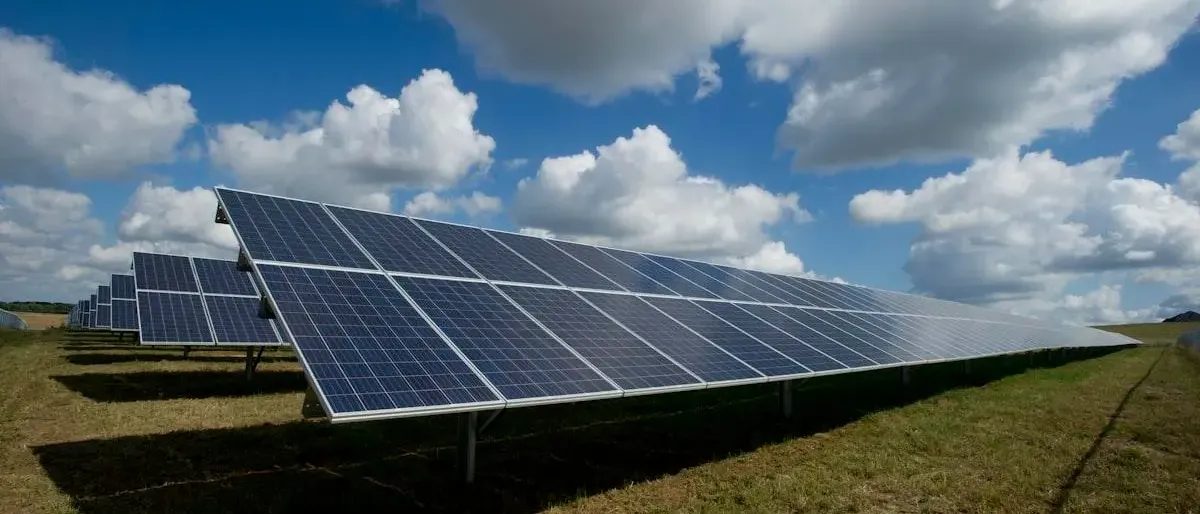
Quick answer: An apartment complex or gated community in Hyderabad can put solar on its shared roof and offset the common-area bill (lifts, pumps, corridor and street lights, STP, clubhouse, EV charging) under net metering on the association's own service connection. Under the TGERC rooftop solar regulation of 2025, residential connections can install up to 100% of sanctioned load, and group and virtual net metering now let one plant's output be credited to several connections. PM Surya Ghar offers housing societies and RWAs central assistance of Rs 18,000 per kW for common facilities, up to 500 kW at 3 kW per house.
Most rooftop solar advice is written for independent houses. Apartments are different. The roof belongs to everyone, the biggest bill is often the common-area connection, and the decision is taken by an association rather than a single family. This guide explains what the 2026 rules in Telangana allow, what subsidy is available, and how a residents' association can decide whether solar makes sense.
Whose roof, whose bill?
In a typical Hyderabad apartment block there are two kinds of electricity connection: one service connection per flat, and one or more common-area connections in the association's name. The common-area connection runs the lifts, water pumps, corridor and basement lighting, the sewage treatment plant, the clubhouse and, increasingly, shared EV chargers. Because these loads run every day, including through the daytime solar hours, the common-area bill is usually the natural first target for a shared rooftop plant.
Gated villa communities are slightly different. Each villa has its own roof and its own connection, so owners can install solar individually under the residential scheme, while the association looks at street lighting, pumps and the clubhouse separately.
Since the terrace is common property, associations usually take the decision at a general body meeting and record it in a resolution before applying. Check your own bye-laws for the exact process.
The rules that apply in Telangana in 2026
Telangana's rooftop solar rules were rewritten by the Telangana Electricity Regulatory Commission (TGERC) in the Rooftop Solar PV Grid Interactive Systems Regulation, 2025, issued on 15 November 2025. It replaced the 2016 net metering regulation and, for the first time, formally introduced group and virtual net metering, which matters for housing societies that do not have one roof per meter.
| Arrangement | How it works | Where it fits in a housing society |
|---|---|---|
| Net metering | Plant connected behind one meter; exports offset imports. Up to 500 kWp; residential consumers up to 100% of sanctioned load | Common-area connection of an apartment block; individual villas |
| Group net metering | Output credited across several connections of the same consumer; below 100 kWp; for domestic and township connections | Associations with more than one common-area connection |
| Virtual net metering | One plant, credits shared among several beneficiaries in the same DISCOM area; below 100 kWp. Wheeling charges and losses apply | Residents who want a share of a plant on the common roof or at another site |
| Gross metering | All output exported and paid for by the DISCOM; up to 1 MWp | Rarely the best fit for a society that wants to cut its own bill |
A few other points from the regulation are worth knowing before you start:
- Approval clock: the DISCOM must complete the technical feasibility check within 15 working days, and systems up to 10 kW are approved automatically.
- Installation window: once cleared, the system has to be installed within 180 days.
- Larger plants: systems above 56 kWp need insurance and certification by the Chief Electrical Inspector.
- Surplus: net-metered surplus is settled at the lowest discovered solar tariff of the previous financial year, so solar pays best when the society uses most of what it generates.
- Charges: net and gross metering are exempt from banking, wheeling, cross-subsidy and additional surcharges. Group and virtual net metering get only partial exemptions.
- Ownership: the regulation also covers third-party owned systems, so a society is not limited to paying for the plant upfront.
For the application steps on TGSPDCL's portal, see our TGSPDCL net metering guide.
What subsidy a housing society can get
Under PM Surya Ghar: Muft Bijli Yojana, Group Housing Societies and Resident Welfare Associations get central financial assistance of Rs 18,000 per kW for common facilities, including EV charging, up to 500 kW, calculated at 3 kW per house. The 500 kW ceiling includes any rooftop plants that individual residents have already installed inside the society. Applications go through the national portal, pmsuryaghar.gov.in.
Individual households, including villa owners in a gated community, are covered by the residential slabs: Rs 30,000 per kW up to 2 kW, Rs 18,000 per kW for additional capacity up to 3 kW, and a maximum of Rs 78,000 for systems of 3 kW and above.
| Who applies | Central assistance | Ceiling |
|---|---|---|
| Housing society or RWA (common facilities, EV charging) | Rs 18,000 per kW | 500 kW, at 3 kW per house, inclusive of residents' own plants |
| Individual household (flat or villa with its own roof) | Rs 30,000 per kW up to 2 kW, Rs 18,000 per kW for the third kW | Rs 78,000 |
A simple illustration of how the ceiling works: in a 100-home community, 3 kW per house gives a 300 kW ceiling for assistance. If 10 villa owners have already installed 3 kW each, that 30 kW counts towards the same ceiling.
How to size a common-area plant
Sizing starts with the bill, not the roof. A practical method for an association:
- Collect 12 months of common-area bills and note the monthly units, so that summer pumping and monsoon months are both visible.
- Estimate generation. In India, 1 kWp of rooftop solar typically generates 4 to 5 units a day (CSE India). Divide your average daily common-area units by 4 to 5 to get a rough plant size. Our kW vs units guide for Hyderabad explains the month-by-month swing.
- Check the roof. Water tanks, lift machine rooms, solar water heaters and parapets cast shadows. Only the shadow-free area counts, and the structure and waterproofing need to be checked before anything is fixed to the terrace.
- Match the arrangement. One common-area connection points to plain net metering; several connections point to group net metering.
- Choose the funding model. Pay from the society corpus, or consider a third-party owned arrangement. Our CAPEX vs OPEX vs PPA guide compares the models.
Practical issues specific to apartments
Terrace space is small relative to the number of flats, so a plant can rarely cover individual flat bills as well as the common load. Wind loads are higher on tall buildings, so mounting structures must be designed for the height. Terraces are also shared spaces, so plan walkways, access for cleaning and a clear rule on who can go up there.
Maintenance matters more than most associations expect: dirt can cut generation by 30% or more if panels are not cleaned (CSE India). Decide at the start who cleans the panels, who checks the monitoring data, and who calls the installer when generation drops. Our solar warranty guide explains what each warranty covers.
Frequently asked questions
Can a single flat owner install solar in an apartment?
Only if they have access to roof space that the association agrees to allot. Otherwise, virtual net metering under the 2025 regulation is designed for consumers who do not have a suitable roof of their own.
Can the society and residents both claim PM Surya Ghar assistance?
Yes, but within one ceiling. The society's 500 kW limit at 3 kW per house includes plants installed by individual residents.
Does the society need a CEIG approval?
Plants above 56 kWp need insurance and certification by the Chief Electrical Inspector under the Telangana regulation. Smaller plants do not.
What happens to surplus units?
Under net metering, surplus is settled at the lowest discovered solar tariff of the previous financial year, which is lower than what the society pays for grid power. Size the plant to what the common area actually uses.
Rules can be revised. This guide is current as of October 2026; check the latest TGERC orders and the PM Surya Ghar portal before you apply.
Talk to a team that has done this before
Greentek has been designing and building solar systems from Secunderabad since 1997. If your association wants a roof survey or a second opinion on a quote, our team is happy to help.
About the Author
About Greentek
Get a Free Solar Quote
A Greentek engineer will call you within 24 hours.
Need Solar Solutions?
Interested in learning more about our solar energy solutions? Get in touch with our experts.
Get Free Consultation